The procurement of capital equipment for major government infrastructure projects, such as concrete batching plants, represents a critical juncture in public expenditure. A persistent and flawed paradigm in this process is the primacy of initial purchase concrete batch plant price as the primary, and often sole, determinant of vendor selection. This approach, while ostensibly prudent and transparent, frequently precipitates a cascade of negative financial and operational consequences that contravene the fundamental principles of responsible stewardship of public funds. The central procurement debate is not between price and efficiency as abstract concepts, but between a myopic focus on upfront capital cost and a rigorous, holistic analysis of total lifecycle value. The latter necessitates an analytical framework that evaluates efficiency, durability, operational expenditure, and project risk mitigation as integral components of the true cost of ownership.

## The False Economy: Deconstructing the Low-Bid Procurement Fallacy
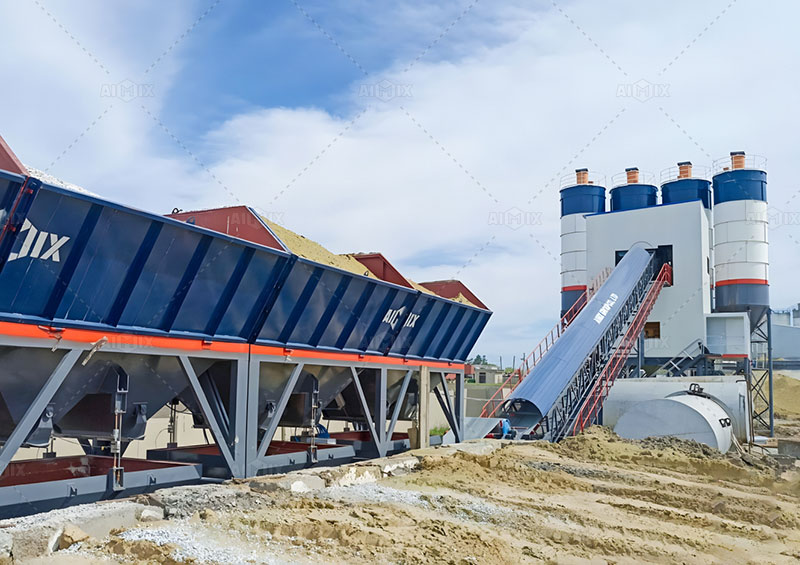
Awarding a contract based solely on the lowest compliant bid for a concrete plant is an exercise in fiscal shortsightedness. This model incentivizes [concrete batching plants manufacturers](https://aimixconcretesolution.com/concrete-batching-plant/manufacturers/) to achieve a competitive price through the strategic de-rating of components, the use of unproven or substandard materials, and the minimization of engineering overhead. The resulting asset, while meeting the basic technical specifications on paper, is often fundamentally compromised in its operational robustness and longevity. The immediate "savings" secured during procurement are rapidly eroded by a higher incidence of mechanical failure, elevated energy consumption due to inefficient design, and exorbitant costs for proprietary or difficult-to-source spare parts. Furthermore, the operational inefficiency of such a plant manifests in lower-than-specified production rates, inconsistent mix quality, and excessive material waste. In the context of a time-sensitive infrastructure project, unplanned downtime is not merely a maintenance issue; it is a critical-path event that delays subsequent construction phases, incurs liquidated damages, and undermines public confidence. The low initial price becomes a misleading indicator, obscuring the substantial and predictable financial liabilities embedded in the asset's operational profile.

## The Lifecycle Cost Framework: A Mandatory Analytical Model
To transcend the limitations of price-only procurement, government agencies must mandate and implement a comprehensive Lifecycle Cost Analysis (LCA) for major equipment acquisitions. This analytical model requires vendors to provide verifiable data and substantiated projections across the asset's entire expected service life. Key quantifiable metrics must include mean time between failures (MTBF) for critical subsystems, projected energy consumption per cubic meter of concrete produced, labor requirements for operation and routine maintenance, and the long-term cost and availability of wear parts. The LCA must also account for the residual value of the equipment at the end of the primary project, accounting for its potential redeployment or resale. This framework shifts the evaluation from a single data point—the bid price—to a multi-variable equation that reveals the genuine economic footprint of the asset. A [wet mix concrete plant](https://aimixconcretesolution.com/concrete-batching-plant/wet-mix/) with a 20% higher acquisition cost but a 40% reduction in energy use, a 30% longer service interval for major components, and a demonstrably higher residual value represents a profoundly better investment of public capital. The LCA transforms the procurement process from a reactive price comparison to a proactive value-engineering exercise.
## Strategic Procurement: Aligning Acquisition with Long-Term Public Value
Ultimately, the procurement of a concrete plant for a flagship infrastructure project must be aligned with the broader strategic objectives of the public works program. The equipment is not an isolated purchase but a foundational tool for project delivery. Its performance directly influences the timeline, budget, quality, and sustainability outcomes of the entire endeavor. A strategically procured plant, selected for its efficiency and reliability, acts as a risk mitigation instrument. It ensures consistent material supply, supports stringent quality assurance protocols, and enables the project to maintain its schedule. Furthermore, specifying equipment with lower carbon emissions and higher resource efficiency contributes to the government's environmental and sustainability mandates, creating public value beyond the immediate structure being built. The procurement criteria must, therefore, be weighted to reflect these strategic priorities. Evaluation matrices should assign significant value to proven reliability data, energy efficiency certifications, the depth of local technical support and parts inventory, and the manufacturer's commitment to training. This approach fosters competition on the basis of performance and long-term value, rather than a race to the bottom on initial price. It recognizes that the most expensive plant is often the one that costs the least to buy. For government infrastructure, where the stakes encompass fiscal responsibility, public safety, and national development, procurement decisions must be informed by total cost awareness, not merely price awareness.

Comments
No comments yet. Be the first to react!