Forget the old-school view of granite crushing as just a brute-force extraction game. In today’s landscape, it’s a sophisticated financial instrument, a play on infrastructure, urbanization, and smart capital deployment. The real story isn’t in the quarry face; it’s on the balance sheet. Understanding the economics of turning one of nature’s hardest rocks into a suite of profitable products requires moving past simple tonnage calculations. It demands a sharp, analytical dive into a triad of forces: the capital and operational costs that form your baseline, the diverse and often premium revenue streams you can unlock, and the powerful, sometimes fickle, currents of market demand that dictate your ultimate success. Let’s decode the modern economic engine of a granite crushing operation.
The Investment Equation: Unpacking Capex and the True Cost of Production
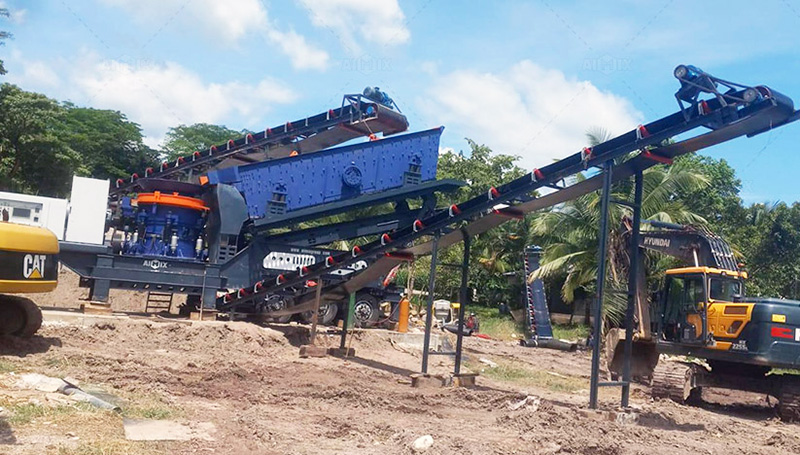
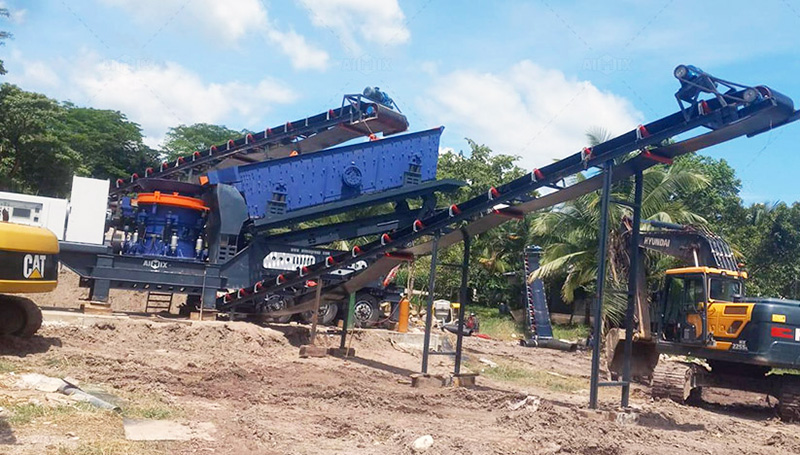
The initial moment of truth is your capital expenditure (Capex). This isn’t just about buying a granite crusher machine; it’s about architecting an entire production system tailored to granite’s notorious abrasiveness. A robust circuit needs a primary jaw crusher for initial fragmentation, followed by a secondary cone crusher for precise shaping and cubical product yield. The choice here is strategic: a high-capacity stationary plant offers unbeatable volume efficiency for a long-life deposit, while a mobile setup provides the agility to service multiple, smaller sites or follow linear projects. The real financial character of your operation, however, is defined by its operational expenditures (Opex). This is where granite asserts its personality. Wear part consumption—manganese steel jaws, concaves, and blow bars—is a relentless and significant cost center. Energy intensity is another major factor; the process of comminution is inherently power-hungry. Your true cost-per-ton is a sum of these relentless inputs: energy, high-maintenance parts, skilled labor, and logistics. Mastering this equation is the first step from being a rock processor to becoming a profitable aggregate producer.
Beyond the Crush: Revenue Streams and the Premium Product Playbook
The most significant economic shift in the industry is the move from selling generic “aggregate” to cultivating a portfolio of specialized products, each with its own margin profile. Your primary revenue will always come from graded aggregates for concrete and asphalt, with prices scaling up for specification-grade material used in critical infrastructure. But the high-margin plays lie elsewhere. The manufactured sand (M-Sand) market is a major opportunity, especially in regions phasing out environmentally costly river sand mining. Producing consistently graded, high-quality M-Sand from granite fines turns a byproduct into a premium commodity. Furthermore, the dimension stone pipeline offers a parallel luxury market. High-quality, visually intact blocks can be diverted to slab producers, creating a lucrative sideline that operates on a completely different (and often more favorable) price matrix than bulk aggregate produced by aggregate crusher machine. This product diversification is your hedge against market volatility and the key to maximizing the intrinsic value locked within every cubic meter of granite.

Riding the Market Wave: Geopositioning and Future-Proofing Your Operation
Your financial destiny is ultimately tied to external demand cycles and your operation’s strategic location. Granite aggregate through stone crusher machine processing is a direct derivative of construction activity, making it hypersensitive to the boom-and-bust cycles of infrastructure spending and real estate development. An operation positioned within the economic orbit of a growing urban center or a designated infrastructure corridor has a built-in advantage, minimizing crippling transport costs that can erase thin margins. This concept of geopositioning is critical. Being the closest, most reliable supplier to a high-demand zone is a more powerful asset than having the largest deposit. Furthermore, the competitive landscape is evolving. The rise of recycled concrete aggregate (RCA) creates substitution pressure in certain applications, pushing savvy granite producers to emphasize their product’s superior strength and durability for high-spec projects. Future-proofing means not just analyzing today’s demand, but anticipating regulatory shifts, environmental mandates, and the growing premium placed on sustainable, locally sourced materials. In the final analysis, a profitable granite operation is one that expertly manages its internal cost engine while strategically navigating the external market ocean.

Comments
No comments yet. Be the first to react!