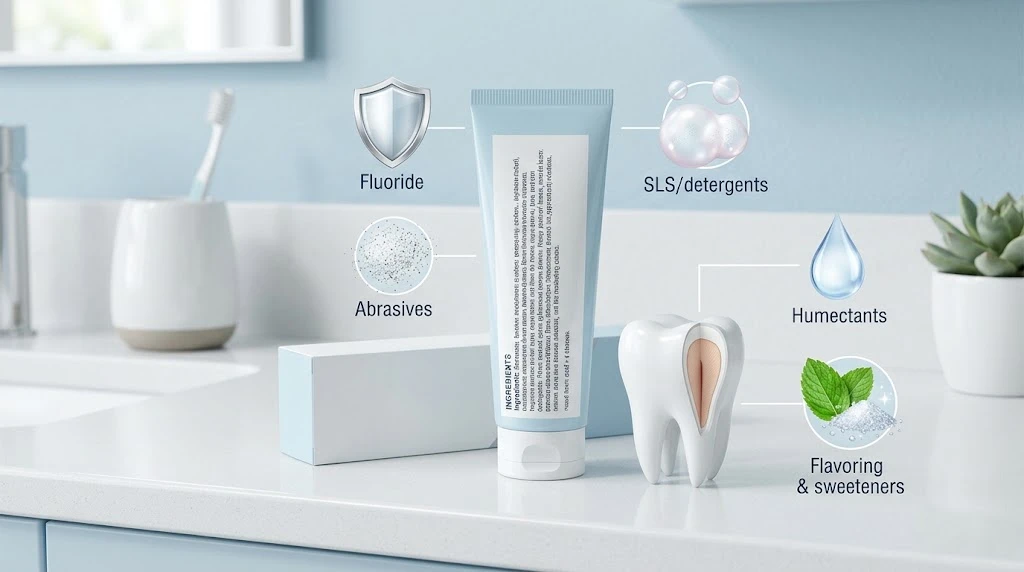
Standing in front of a wall of toothpaste boxes can feel overwhelming. Whitening, sensitivity, herbal, charcoal — the options seem endless. Most people default to whatever is cheapest or most familiar. But the label holds real information, and learning to read it changes how you care for your teeth.
The small print on the back tells you exactly what the product does. You do not need a chemistry degree to decode it. This guide walks you through the ingredients that matter and explains why they matter. No fluff, no marketing spin — just the essentials for making a confident choice.
Fluoride: The Non-Negotiable Ingredient
Fluoride is the single most important component in any toothpaste. It strengthens enamel, the hard outer shell of your teeth, and fights cavities at the source. When oral bacteria feed on leftover food, they produce acid that eats away at tooth structure. Fluoride reverses this process by remineralizing weakened areas before decay takes hold.
Turn the tube over and read the active ingredients. You will typically find either sodium fluoride or stannous fluoride listed. Both are effective cavity fighters. Stannous fluoride goes a step further by reducing the bacteria responsible for gum inflammation and bleeding.
A small figure followed by “ppm” may also appear on the label. This measures fluoride concentration in parts per million. Adult formulas generally fall between 1350 and 1450 ppm, while children’s toothpaste contains less. If you are ever uncertain about which concentration suits your situation, a dentist at Clementi can evaluate your enamel and offer tailored guidance. For daily adult use, the exact number matters less than simply making sure fluoride is present.
Abrasives: Cleaning Without Causing Harm
Abrasives give toothpaste its slightly gritty feel and do the physical work of removing plaque and surface stains. Calcium carbonate, hydrated silica, and alumina are among the most common. Think of them as tiny scrubbing brushes that polish your teeth with each stroke. Without abrasives, toothpaste would offer almost no real cleaning power.
The issue is finding the right balance. Too aggressive, and you risk wearing down enamel permanently. Once enamel erodes, it does not come back. Teeth become more sensitive, and the yellowish dentin beneath the surface starts to show through.
Some tubes display a number labeled RDA, which stands for Relative Dentin Abrasivity. Anything below 100 is considered safe for regular use. Values above 150 warrant caution, particularly for those with thin enamel. Whitening formulas often push abrasive levels higher to remove surface discoloration, which can backfire. If sensitivity appears after switching to a whitening paste, the abrasive level may be the culprit. Consulting a dentist around West Coast can help you determine whether abrasion is contributing to your sensitivity. A gentler alternative cleans effectively without the risk.
Detergents: Where the Foam Comes From
That familiar foam you feel during brushing comes from detergents. Sodium lauryl sulfate, or SLS, is the most common agent used. It breaks apart plaque and helps the paste spread evenly across every tooth surface. The foam itself has no cleaning benefit — it is simply a byproduct.
SLS is harmless for most people. But it can irritate the soft tissues inside the mouth. People who suffer from frequent canker sores often find that switching to an SLS-free formula reduces flare-ups. Some also experience a drying sensation with SLS-based products.
If irritation is a recurring problem, an SLS-free formula is worth trying. A dentist at Clementi can suggest alternative formulations that eliminate this ingredient without sacrificing cleaning power. The actual effectiveness of toothpaste comes from fluoride and abrasives, not from the foam.
Humectants and Binders: The Unsung Helpers
A toothpaste that dries out in the tube would be useless. Humectants prevent this by trapping moisture and keeping the texture smooth. Glycerin, sorbitol, and propylene glycol are standard ingredients that serve this function. They ensure the paste stays consistent from the first squeeze to the last.
Binders do exactly what the name implies — they hold everything together. Xanthan gum and carrageenan provide the thickness and uniformity you expect from a tube of toothpaste. These ingredients do not actively clean your teeth, but they make the product practical and pleasant to use.
Flavorings and Sweeteners: Making It Palatable
Without added flavor, toothpaste would taste bitter and unpleasant. Mint is the dominant choice, though cinnamon and bubblegum varieties exist for different preferences. These flavoring agents do nothing for your oral health. They simply mask the taste of active ingredients and make the brushing experience more enjoyable.
Sweeteners serve a similar masking role but with one notable exception. Saccharin and sucralose are commonly used sugar alternatives that add sweetness without promoting decay. Xylitol stands apart because it actively fights harmful bacteria. When oral bacteria attempt to consume xylitol, they cannot digest it and gradually die off. Finding xylitol on a label is a genuine benefit — it is a sweetener that does double duty for your teeth.
Decoding the Marketing on the Front
The front of the box exists to sell you on a product. The back exists to tell you the truth. Several common claims are worth examining more closely.
Whitening
Most whitening formulas contain higher levels of abrasive agents designed to scrub away stains. Some also include blue covarine, a compound that bonds to tooth enamel. It leaves behind a faint blue tint that counteracts yellow tones, making teeth appear whiter. The effect is temporary and cosmetic, not a true whitening of the tooth itself.
Sensitivity Relief
If you see this claim, check for potassium nitrate or stannous fluoride among the active ingredients. Potassium nitrate calms the nerve endings inside teeth, reducing pain signals. It requires consistent use over several weeks before results appear. Stannous fluoride works differently by physically blocking the tiny tubules that carry sensations to the nerve.
If sensitivity persists despite using these products consistently, the cause may require clinical evaluation. A dentist around West Coast can determine whether the underlying issue demands treatment beyond what toothpaste can provide. In many cases, a targeted clinical approach makes the difference.
Tartar Control
Formulas marketed for tartar control typically contain pyrophosphates. Their role is preventive — they interfere with plaque’s ability to harden into tartar. Once tartar has formed, no toothpaste can dissolve or remove it. Professional cleaning remains the only solution for existing buildup.
Natural
The word “natural” carries no binding legal definition in the toothpaste market. It generally indicates the absence of artificial colors or flavoring agents. The critical concern is when a natural product leaves out fluoride entirely. That decision removes the most protective ingredient available. Regardless of other label claims, fluoride should always be present in the toothpaste you choose.
When Products on the Shelf Are Not Enough
Label knowledge empowers you to choose wisely, but it has limits. Some problems require more than an informed purchase. Persistent gum bleeding during brushing points to inflammation that a tube of paste cannot fix. Pain when eating hot or cold foods may signal thin enamel, an undetected cavity, or receding gums.
A dental professional sees what you cannot. They examine your mouth in detail and identify the specific causes behind your symptoms. Seeking out a dentist at Clementi for a thorough assessment means you get recommendations based on your actual condition, not general assumptions. They can also flag habits like over-brushing, which is one of the most common yet overlooked causes of sensitivity.
Similarly, scheduling a visit with a dentist around West Coast gives you access to clinical-grade products and preventive strategies tailored to your needs. Professional guidance fills the gap that over-the-counter products leave behind.
Building a Simple, Effective Routine
Choosing the right toothpaste is only one step. Consistent habits are what truly protect your teeth. Brush for two full minutes, twice a day, using gentle circular motions rather than aggressive scrubbing. After brushing, spit but do not rinse — this lets the fluoride remain in contact with your enamel longer.
Floss once daily to clean the spaces your toothpaste and brush cannot reach. Focus on the ingredients, not the packaging. Fluoride is essential. Potassium nitrate helps if sensitivity is an issue. Watch the abrasive level if your enamel is thin. Avoid SLS if your mouth is easily irritated. These small, deliberate choices form the foundation of lasting oral health.

Comments
No comments yet. Be the first to react!